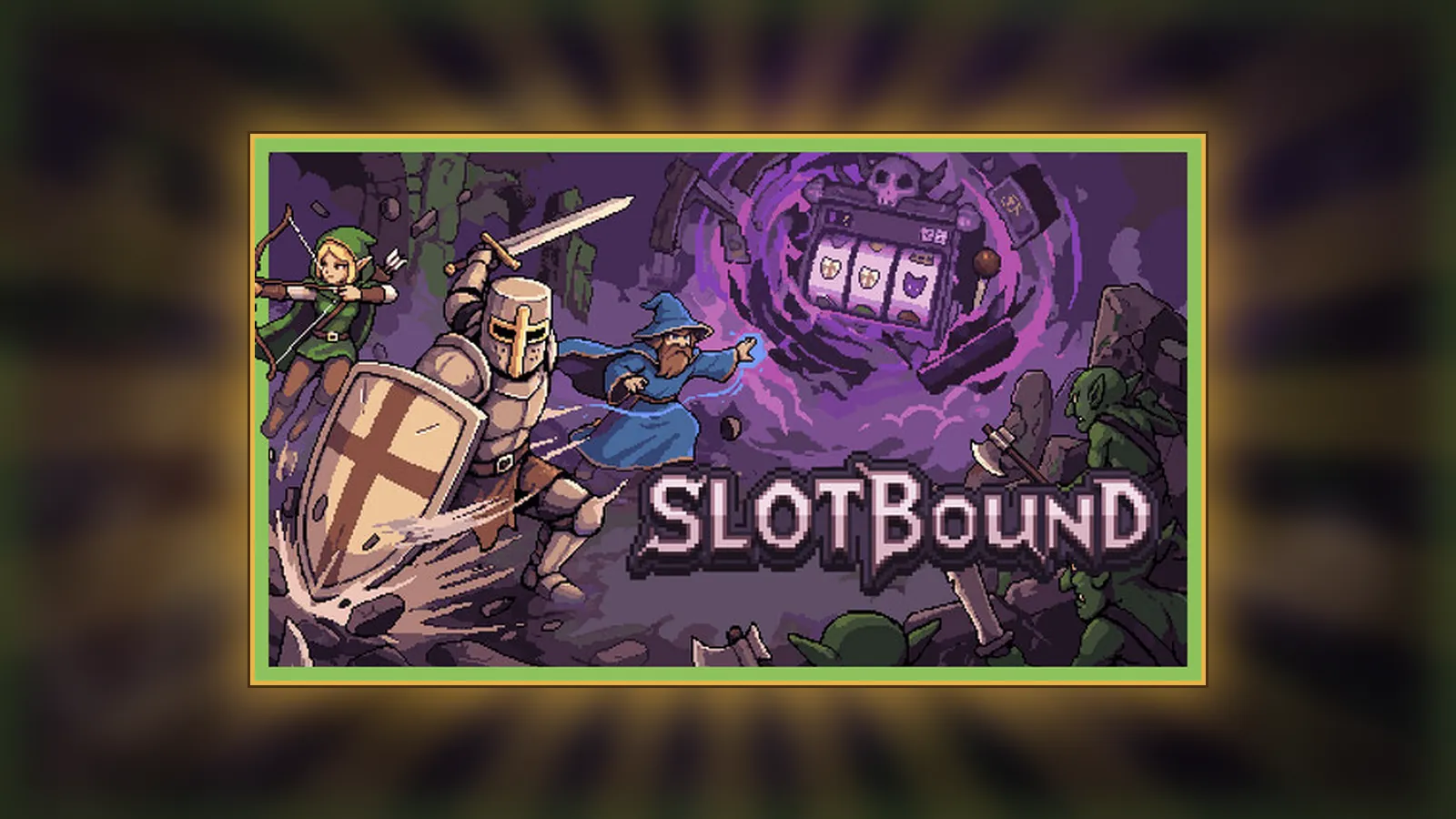
AI wrote Slotbound’s code. The hit came from everything else. The solo developer behind it, who goes by Optima Arch, says the game sold 100,000 copies in three days, and the record of how it got there reads like a year of very human work.
What happened
Slotbound is a roguelike auto-battler where you spin a 3x3 slot machine to summon units and grow your army by absorbing others. It came out on Steam on November 12. Two days later, Optima Arch posted that it had passed $356K in gross revenue and 50,000 copies sold in its first 48 hours, with a peak of 9,377 concurrent players.
The next update was bigger. Slotbound passed 100,000 copies sold in its first 3 days, according to the developer, who also counted nine updates since launch. Those sales figures are the developer’s own. The player count is easier to check. Steam’s API showed 28,589 people playing on Tuesday morning, five days after release.
The AI part is not a rumor. In May, Optima Arch wrote that “100% of the game’s code was generated with AI. I absolutely cannot code a single line at all.” The game runs on LÖVE, and the coding help changed over time, from Copilot and Cursor early on to Codex by the summer. We can’t verify the 100% figure, but nobody has to. The interesting part is what the AI didn’t do.
The year AI didn’t spend
Optima Arch was blunt about it in July. “AI made it possible for me to build the game, but it couldn’t decide whether the game was fun, balanced, or easy to understand,” the developer wrote. “I still had to design everything, test countless runs, rebuild the UI, and throw away ideas that didn’t work.”
A later post put it even more plainly. Most of the process was “designing systems, testing builds, fixing bugs, reworking balance, removing ideas that weren’t fun”. That took about a year to launch, eight months of it before the demo. A coding agent can write a damage formula in seconds. Deciding whether the number feels good after the fortieth run is still a person staring at a screen.
The art wasn’t a one-prompt job either. The small unit sprites and icons are bought assets, while menus and other art came from Nano Banana and PixelLab. Our AI pixel art generator guide compares PixelLab with other sprite tools. In August, Optima Arch went looking for a pixel artist at $100 to $200 per animated unit, paid after launch, to match the existing style. The week’s big AI-coded success story fields an army of sprites somebody sold in an asset store.
The audience was built by hand
The Steam page went live in March, eight months before release. From there, Optima Arch posted about the game across more than a dozen subreddits, from r/love2d to r/roguelites to r/KoreanGameDev, and the post history is a quiet lesson in tenacity. Even the Steam capsule was workshopped in public, with readers asked whether the art felt “too obviously AI-generated.”
The demo did the heavy lifting. The Steam demo launched on July 10 with around 590 wishlists, and a month later the game had passed 70,000. The developer says it reached #2 among all Steam demos and then 100,000 wishlists by late September, ahead of Next Fest.
Success came with chores AI can’t take on. In September a player flagged a Douyin mini-game whose pixel art, unit designs and UI looked almost directly taken from Slotbound, monetized with ads, two months before the real game was out. Then launch day slipped because Steam was still reviewing the build, the same queue we wrote about in our Steam review backlog post.
The disclosure question
Slotbound’s Steam disclosure says “various visual assets and promotional materials” were made with the help of generative AI. It says nothing about code. Some players read that as hiding something. We don’t think it is.
Steam’s content survey notes that many development tools now have AI built in. “Efficiency gains through the use of these tools is not the focus of this section,” it says. The form is concerned with AI “content that ships with your game, and is consumed by players,” such as artwork, sound, narrative and localization. Optima Arch made the same argument back in July. “Assisted coding is not what Steam’s disclosure is asking about,” the developer wrote.
The form and the conversation are two different things, though. Optima Arch has been open about AI coding on Reddit since at least May, which is more candor than the form asks for. Reviews are still positive but softer, from 87% of 239 on November 14 to 78% of 986 now, and GameMeca already noted some complaints about unstable balance.
What indie devs can take from Slotbound
- Put the Steam page up early. Slotbound’s page was live about eight months before launch, so every post and the demo had somewhere to send wishlists.
- Ship a demo before you think you’re ready. Slotbound’s jump from 590 to 70,000 wishlists came in the month after its demo.
- Post where your genre lives, again and again. Engine subreddits, genre subreddits and dev communities each brought different players. Share progress, not ads.
- Use AI for the build, keep the judgment. Let the agent write code, then play your own game until you can say why each system is fun.
- Buy or commission what AI can’t keep consistent. Asset packs and a contract artist kept Slotbound’s units on model. Budget for that, even if payment comes after launch.
- Test your capsule in public. Ask other devs which version they would click, and whether it reads well at thumbnail size.
- Fill out the AI disclosure for what players see and hear. That’s what Steam’s form asks about. If you also lean on AI for code, saying so somewhere public saves a fight in the reviews later. Our guide to selling a game made with AI covers what each tool’s terms allow.
- Keep dated proof of your work. Builds, screenshots and videos with dates make a copyright complaint far easier if a clone shows up.
- Submit your build weeks before launch. Review queues are long right now, and a public launch date is an uncomfortable thing to miss.
- Plan to patch fast. Optima Arch says many of Slotbound’s nine updates since launch came straight from player feedback and bug reports.