git clone https://github.com/WU-HAOTIAN34/2dimg2motion.git ~/.claude/skills/2dimg2motionRun it in a terminal, then start a new agent session so the skill loads. Read the repo's README and scripts before you install: skills run with your agent's permissions.
What it does
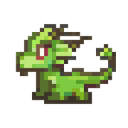
2dimg2motion is an agent skill for 2D game animation. You give your agent one baseline image of a character, creature, vehicle, weapon or prop and describe a move, such as an idle, walk, sword slash or ground smash, and it produces a sequence of transparent PNG frames plus a packed spritesheet, a preview GIF and a manifest file.
Rather than warping or sliding parts of the original picture, the skill has the image model redraw the whole character in a few key poses and then fill in the frames between them. Before drawing, it sets an identity lock on the character's proportions, art style and parts like weapons, tails or wings, so they don't swap sides or vanish mid-motion. By default it produces 14 frames per action that loop back to the starting pose.
Small Python scripts handle only the non-creative steps: standardizing the input image, removing backgrounds, normalizing the canvas and foot baseline, packing the sheet and checking the frame structure. Two sub-skills prepare an input image with enough transparent margin and extract reusable notes from reference clips, past outputs or existing spritesheets, so later animations follow what worked before.
Features
- Turns a single 2D image into a transparent animation sequence and spritesheet
- Redraws whole key poses, then generates in-between frames, instead of warping the source image
- Identity lock keeps proportions, style and parts like weapons or wings consistent across frames
- Outputs RGBA PNG frames, a packed spritesheet, a preview GIF and a manifest
- Sub-skills to standardize input images and learn from reference clips or past outputs
Limits
- Frame art comes from your agent's image generation, so results depend on that model (the skill defaults to the built-in image tool)
- 2D only, with no 3D or skeletal rig output
- Needs Python with Pillow for the post-processing scripts